

We live to Bear Good Fruits: Sunday Breakfast with the Word 27th Week Ordinary Time Year A

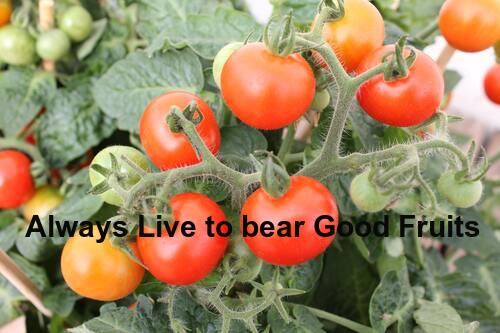
Sunday Breakfast with the Word 27th Week Ordinary Time of the Year A
Isaiah 5:1-7, Philippians 4:6-9, Matthew 21:33-43
Introduction
A man once shared a painful story about his only son. He had three children, two daughters and one son. He loved all his children, but he had great hopes for his son. Because he wanted the best for him, he sent him to a good university and did everything possible to make sure he lacked nothing.
He paid his school fees, provided for his needs, supported him, encouraged him, and dreamed of the day his son would become a lawyer.
For six long years, the father sacrificed so much. He invested his money, his time, his energy, and his love. But to his great disappointment, the son suddenly abandoned his education halfway.
He walked away from school, turned away from his parents, and refused the responsibilities expected of him as the only son of the family.
The father was deeply hurt. It was not only because the boy left school, but because so much love, sacrifice, and effort seemed to have been wasted.
Everything the father had done was meant to help the son become something good, something meaningful, something fruitful. But instead of giving joy to his father, he brought him disappointment.
This is very similar to the message of the first reading and the Gospel. God chose Israel as His vineyard. He cared for it, protected it, provided for it, and gave it everything it needed to bear good fruit. But instead of producing the fruits of faithfulness, justice, love, and obedience, the vineyard produced the opposite.
This message is also for us today. God has invested so much in our lives. He has given us life, talents, family, opportunities, education, health, faith, grace, and many other blessings. He has placed people around us to guide us, support us, and help us grow.
The question for us today is “what are we producing with all that God has given us?” God did not bless us so that His gifts would end with us. He blessed us so that our lives would become fruitful.
Our talents should bless others. Our education should serve others. Our faith should inspire others. Our opportunities should help us build something good.
The greatest tragedy is not that we have little. The greatest tragedy is to receive so much from God and produce nothing with it.
God has invested deeply in us. We should not waste our opportunities. We should bear the kind of fruit that gives joy to the One who has loved us, provided for us, and entrusted so much into our hands.
Interpretation of the Key Features
To fully understand the gospel and the first reading, we have to note the key figures in this gospel. We have the landowner, the Vineyard, the tenants, the servants, and the son.
From a clear interpretation, the Landowner is God; the vineyard is the nation of Israel, carefully chosen and prepared by God to be His fruitful vineyard, as the first reading says.
The tenants are the religious leaders and the people whom God entrusted with the care of the vine.
The servants are the prophets sent to the people, and the son is Jesus Christ, who was later crucified by the people He was sent to save.
The Landowner Who Planted a Vineyard
The first reading and the gospel captured the effort of a landowner who planted a Vineyard. In the first reading, the prophet Isaiah gives us another beautiful image of the relationship between God and His vineyard.
He shows us a vineyard owner who did not simply plant and leave. He carefully prepared the land, removed every obstacle, planted the best vines, protected the vineyard, and provided everything necessary for it to produce good fruit.
Isaiah says:
My friend had a vineyard
on a fertile hillside.
He dug the soil, cleared it of stones
and planted choice vines in it.
In the middle he built a tower,
He dug a press there too.
He expected it to yield grapes,
but sour grapes were all that it gave,
The gospel also narrates to us a landowner who planted a vineyard; he fenced it round, dug a winepress in it and built a tower; then he leased it to tenants and went abroad. The first reading and the gospel have the same powerful message.
The readings show powerful picture of God’s relationship with His people. God did everything He could for His vineyard. He chose a fertile ground, removed the stones, planted the best vines, built a tower for protection, and prepared a winepress in expectation of a harvest. Everything was ready. Everything necessary for fruitfulness had been provided.
However, the painful part of the story is that after all the preparation, care, protection, and investment, the vineyard produced sour grapes.
This is where the Word of God becomes personal. God has also prepared so much for us. He has given us life, faith, talents, opportunities, people who love us, moments of grace, and countless chances to grow. He has removed many stones from our path and protected us in ways we may never fully understand.
However, God does not only look at what He has given us. He also looks for what our lives are producing. After receiving so much love, are we producing love? After receiving mercy, are we becoming merciful?
After receiving forgiveness, are we forgiving others? After receiving so many blessings, are our lives becoming a blessing?
The tragedy of the vineyard was not that the owner failed to care for it. The tragedy was that after receiving everything it needed, it still produced the wrong fruit.
Therefore, the question comes back to each one of us: after everything God has done for me, what fruit is my life producing?
In his effort to see that the vineyard bear good fruits, he put a fence around it, he built a tower in it and dug a winepress inside it; then he leased it to tenants and went abroad. To understand this , we have to go to the deep root of the practice of some of the terms used in this parable.
1. The Presence of Vineyards
In the life of the Israelites, the presence of vineyards was often a sign of prosperity, abundance, and blessing.
A vineyard was not just a piece of land; it represented fruitfulness, stability, and a future filled with hope. This is why God promised in Jeremiah 32:15 and Ezekiel 28:26 that vineyards would again be planted in their midst.
This helps us understand why the tenants in the parable wanted to possess the vineyard at all costs. They knew the value of what had been entrusted to them. The vineyard represented wealth, security, and blessing.
Spiritually, this reminds us that God has also entrusted many “vineyards” to us: our life, our family, our gifts, our faith, our opportunities, and our responsibilities. What God gives us is precious, and He expects us to value it and use it well.
2. Location of Winepresses
Secondly, winepresses were not found in every vineyard. In many places, grapes were taken elsewhere to be processed into wine.
So, when a landowner built a winepress inside his own vineyard, it showed special care, serious investment, and great expectation.
This is important in both the first reading and the Gospel. The owner did not just plant vines and walk away. He provided everything needed for the vineyard to succeed.
This is also how God treats us. He does not simply give us life and leave us alone. He gives us grace, guidance, people to support us, opportunities to grow, and many chances to become fruitful.
The presence of the winepress tells us that God prepares us for fruitfulness before He asks us for any fruit. So, you are already prepared.
3. The Fence
The fence was built to protect the vineyard from danger, animals, thieves, and anything that could destroy the vines.
This is very different from what happened in the parable of the wheat and the weeds in Matthew 13:24–30, where an enemy came at night and sowed bad seed among the good seed.
The fence, therefore, is a sign of protection. In the same way, God continually protects us in ways we often do not see. He places boundaries in our lives, corrects us, prunes us, warns us, and sometimes even closes certain doors for our own good.
What we sometimes call limitation may actually be a protection. God’s fence is not always there to stop us; sometimes it is there to save us.
4. The Presence of the Tower
The tower was another important feature of the vineyard. It was built for watching, guarding, and identifying the vineyard from a distance.
Anyone who saw the tower would know that a vineyard existed there. This gives us another beautiful spiritual meaning. God does not bless us only for ourselves. He also calls us to become visible signs of His presence. Just as the tower stood where people could see it, we are called to stand as light in the world.
Our faith should be visible in our actions. Our goodness should point people to God. Our lives should become a sign that God is present. We are not called to hide the vineyard; we are called to make its fruit visible.
The Message
Just as God blessed Israel with a land flowing with milk and honey and expected them to bear good fruit, God has also blessed us with natural and human resources.
He cares deeply for our spiritual and physical well-being. Like the fence, He protects us. Like the pruning of the vineyard, He corrects and purifies us. Like the tower, He calls us to become light for others. Like the winepress, He provides what we need to become fruitful.
God has invested so much in us. He has given us life, talents, opportunities, family, faith, grace, education, strength, and countless chances. And because He has invested so much, He expects fruit.
But the painful truth is that many times we have turned things upside down. We have received blessings but forgotten the One who blessed us. We have used God’s gifts while neglecting God Himself.
The Landowner Expects Fruits from His Vineyard.
In the readings, the Landowner does His part perfectly. He prepares the vineyard, protects it, equips it, and entrusts it to others.
Then He expects those in charge to do their part. This is why He sends servants, more servants, and finally His beloved Son. The repeated sending shows that the Landowner is still waiting for fruit, still hoping for a response, still giving another chance.
This reveals something important: God has already given us what we need to become good, to grow in faith, to remain close to Him, and to live meaningful lives.
Yet instead of giving Him the fruits of love, justice, faithfulness, and sincerity, humanity often gives Him the opposite: injustice, corruption, selfishness, violence, dishonesty, and faithlessness. The problem is not that God has failed to provide. The problem is that we often fail to respond.
The Landowner Who Sends
The Landowner sent His servants to the people of Israel. These servants represent the prophets who were sent to guide, warn, correct, and bring the people back to God.
Yet many of them were rejected, mistreated, persecuted, and killed. Finally, God sent His Son, Jesus Christ. He came with love, truth, mercy, and salvation, but He too was rejected and crucified.
The sending itself is a sign of love. God sends because He cares. He sends because He does not want His people to be lost. He sends because He still hopes for conversion. Even today, God continues to send people and experiences into our lives. He sends ministers, spiritual directors, family members, friends, teachers, difficult circumstances, moments of correction, and even painful experiences that can awaken us.
However, many times, we do not pay attention. We want to live only the way we choose. Sometimes, we understand too late that God had been speaking to us all along.
Judgement Awaits
In the first reading, the Vineyard Owner cries out in pain:
“What more can I again do for my vineyard that I have not done before? I expected it to give me fine grapes, but it yielded wild ones?” This is the cry of disappointed love.
God expected justice, righteousness, peace, faithfulness, compassion, and holiness. Instead, humanity often produces injustice, bribery, corruption, poverty, hunger, oppression, selfishness, and faithlessness.
The tragedy is not that God failed to care for the vineyard. The tragedy is that after receiving so much, the vineyard still produced the wrong fruit. Both the first reading and the Gospel make it clear that responsibility has consequences.
The Vineyard Owner will not allow unfruitfulness, injustice, and rejection to continue forever. Those who reject the Stone, Jesus Christ, also reject the foundation on which true life must be built. As Matthew 21:42 reminds us, the rejected Stone becomes the cornerstone.
So, the message is both a warning and an invitation. Before judgement comes, God still gives us time to change. Before the vineyard is taken away, God still sends His Word. Before the final account, God still gives us another opportunity to bear good fruit.
The question, therefore, is not only, What has God given me? The deeper question is: What am I producing with what God has entrusted to me?
Conclusion
1.This shows us clearly that God expects us to bear good fruit with everything He has done for us, everything He has provided for us, and everything He continues to do in our lives. The fact that we are still alive today is not without a purpose.
God has continued to give us time, opportunities, strength, and grace so that we may sow the seeds that will lead us to eternal life. Every new day is another chance to love more, forgive more, serve more, and draw closer to Him.
2. God has also blessed us with both human and natural resources for our physical well-being. He provides people to help us, opportunities to grow, and the things we need to live. Spiritually, He continues to feed us with His Word so that we may know Him better and remain close to Him.
Yet the painful truth is that many times we pay little or no attention to Him. Sometimes, we even disregard the efforts of priests, ministers, spiritual directors, and others whom God sends to care for our souls. God continues to speak, but the question is: are we listening?
3. God has also blessed each of us with different gifts and talents. Sadly, some of these gifts have been neglected, buried, or left unused.
What God gives us is not meant to remain stagnant. Our gifts are meant to grow, to serve, and to become blessings to others.
A talent that is never used cannot produce fruit. Whatever God has placed in your hands, use it well. Your gift may be exactly what someone else needs.
4. The parable was directly addressed to the Jews, the Pharisees, and the elders of Israel, especially those who refused to recognize and accept the works and teachings of the Messiah. Because of their rejection, Jesus warns that the Kingdom of God will be given to a people who will produce its fruit.
What God truly desires from us is not simply the desire to be known, to become popular, or to possess everything in this world. It is not about how many positions we occupy, how many titles we carry, or how much money we have.
At the end of the day, the most important question is: how close are we to God? We may possess many things and still lose the most important thing—our relationship with the One who gave us everything.
5. The readings also remind us that everything we do today has consequences. There will be a day of reckoning. There will be a day when we stand before our Creator and give an account of the life, opportunities, talents, blessings, and responsibilities He entrusted to us.
One day, the question will not simply be, “How much did you have?” but “What did you do with what I gave you?” This is why we must live carefully, love sincerely, forgive quickly, serve generously, and remain faithful to God.
6. Finally, Saint Paul in the second reading shows us how to produce good fruit. He teaches us to remain close to God through prayer, to place our worries and needs into His hands, and to allow His peace to fill our hearts.
He also asks us to focus our minds on whatever is true, noble, good, pure, beautiful, and worthy of praise.
This is very important because what constantly occupies our mind eventually influences our actions. If we continually feed our minds with hatred, jealousy, evil desires, anger, and wickedness, they will eventually appear in our lives. But when we focus on what is good, holy, beautiful, and pleasing to God, we become more motivated to live that way.
So, beloved brothers and sisters, remain faithful to God. Make good use of everything He has entrusted to you. Let your life produce the fruits of love, peace, justice, kindness, forgiveness, faithfulness, and holiness.
Whatever you may be passing through today, do not lose hope. There is always light at the end of the tunnel.
God is still working in your life, and as long as He gives you another day, He is giving you another opportunity to bear good fruit.
Remain inspired, remain faithful, and be blessed.
God bless you, and Happy Sunday.


Amen! Thank you Padre. Happy Sunday to too!
Amen 🙏
Lovely homily. Thanks and God bless you padre.
Happy Sunday and a great week ahead
Amen
Wow,mind blowing piece. Thank you Thank you and thank you. I’m so inspired. God bless you Fr Sanctus.