

When God Calls Ordinary People to Do Extraordinary Things. Solemnity of Ss Peter and Paul

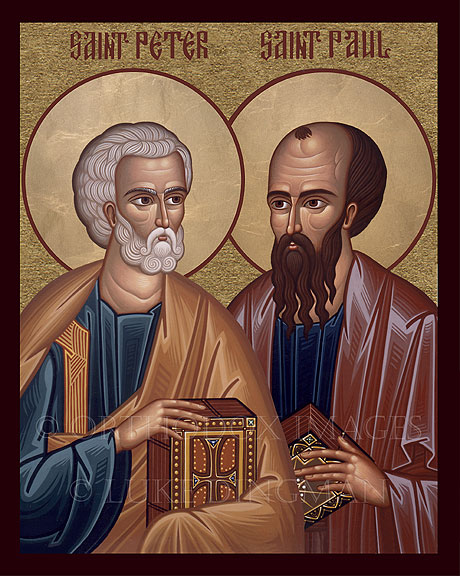
Sunday Breakfast With the Word Solemnity of Ss Peter and Paul
“When God Calls Ordinary People to Do Extraordinary Things”
Today we celebrate the solemnity of two great pillars of our faith. We celebrate the solemnity of Saints Peter and Paul. SS Peter and Paul are two great pillars of the early Church.
They are two very different men but, chosen by God to do something incredible.
Today, we celebrate them as icons of our faith but their early lives were not iconic. They began as ordinary men.
They were far away from God and made a lot of mistakes. Peter denied Jesus. Paul whose original name was Saul was a great persecutor of the early church.
So, it means that we are celebrating men whose lives were full of mistakes before. But now they become great pillars of the Church.
This celebration today shows us how God uses flawed, fearful, even stubborn people to do great works and to change the world.
This celebration today also teaches us that we should not allow our past to define our future. Our future can become bright again if we can discard the past.
God makes use of ordinary things to make them extraordinary. Let us take a moment of analysis about these two great apostles.
The Journey from the Past to the Present.
1. Peter was a fisherman. He was often impulsive and afraid, but he loved Jesus.
During the trial of Jesus Christ, Peter could not defend Jesus Christ, even in the presence of a maid. He denied Jesus three times because fear gripped him, yet despite his past, Jesus still chose him to be the rock on which the Church would be built.
In the Gospel (Matthew 16:13-19), Peter boldly says, “You are the Christ, the Son of the living God.” And Jesus responds, “You are Peter, and on this rock I will build my Church.”
Who could imagine that a person who betrayed His master, could be an icon and a leader of the church? Sometimes our past is not a determinant of who we are but part of the success story.
2. Your past mistakes are not who you are but part of the journey to who God wants you to be.
Therefore, there is always a constant journey from the past to the present. Quit crucifying yourself because of the past.
In the first reading (Acts 12:1-11), Peter is in prison, chained, and guarded, and it seems like the end. But God is not finished with him yet. An angel breaks his chains, opens the prison doors, and leads him to freedom.
We might be imprisoned today by our mistakes, sins and guilt, you might be thinking that there is no more forgiveness for you, but one day, the angel of freedom will remember you. All hope is not lost.
Maybe there is an addiction that you are currently struggling with, or maybe there are problems you have concluded it is not going to end, but like Peter, one day, you will wake up and say “Now I know the Lord did save me.” Peter, though imperfect, and imprisoned, was still chosen to lead.
The Journey From A Persecutor to Preacher of the Word.
Paul’s story is even more dramatic. He hated Christians. He hunted them. But then Jesus appeared to him on the road to Damascus and turned his life upside down.
In the second reading (2 Timothy 4:6-8,17-18), Paul is nearing the end of his life. He looks back and says:
“I have fought the good fight, I have run the race, I have kept the faith.”
He speaks as a man ready to die, not with fear, but with fulfilment. He had once tried to destroy the Church. Now he has built it across nations.
He says, “The Lord stood by me and gave me power… The Lord will rescue me from all evil.” Even in death, Paul speaks with unshakable faith.
This teaches us that despite what we have not done well, God can still transform us and use us mightily.
You can still be a powerful instrument of change to your family, community and the world. You are not a finished product yet.
They Left Everything for the Sake of Jesus.
1. Saints Peter and Paul were not just names in the Bible, they were real people, with real lives, jobs, relationships, and dreams. Yet, when Jesus called them, they gave up everything to follow Him.
2. Take Peter for example. Before meeting Jesus, Peter was a simple fisherman. Fishing was not just his job; it was his way of life, how he fed his family and earned a living. But when Jesus said, “Come, follow me, and I will make you fishers of men” (Matthew 4:19), Peter didn’t argue or delay, he dropped his nets and followed. That moment changed his life forever.
What is more touching is that Peter had a family. The Bible tells us that Jesus once healed Peter’s mother-in-law (Matthew 8:14), which means Peter was married, and perhaps even had children.
Still, Peter placed Jesus above his family, career, and comfort. That kind of sacrifice shows us what true commitment to God can look like.
3. Likewise, Paul was a tentmaker, as we read in Acts 18:3. He was educated, busy, and had a respected place in society. Yet when he encountered Jesus, everything changed.
Paul left behind his old life to become a tireless missionary of the Gospel, travelling far and wide to bring the Good News to the Gentiles.
What do we learn from them? We have to understand that no matter how busy we are or how successful we seem, God should always come first.
When we put God above all, everything else finds its proper place. God doesn’t call the perfect, He perfects those He calls.
No Sin is Too Great for God’s Mercy.
Sometimes we feel unworthy of God’s love because of our past mistakes. But Saints Peter and Paul show us that no sin is too great for God’s mercy.
Peter denied Jesus three times. He was afraid. He fell under pressure. But Jesus accepted him. Jesus restored him with love and gave him a new mission.
Paul, on the other hand, went even further. He was a persecutor of the early Christians, hunting them down and approving of their deaths. Yet God looked beyond Paul’s past and saw his potential.
On the road to Damascus, Jesus stopped him in his tracks and turned his life around.
So never say “God will not forgive me again. It is time to approach God at the confession and confess your sins. No sin is too great for God’s mercy.”
If God can show mercy to a denier and a persecutor, He can forgive you. If God can use them, He can use you to change the world. All He needs is your “yes.” No matter what your past looks like, God can rewrite your story.
The Question That Changes Everything.
sponsored
During their encounter with Jesus Christ, Jesus asked both Peter and Paul life-changing questions.
To Peter, Jesus asked: “Simon, son of John, do you love me?” (John 21:15). He asked this not once, but three times, which mirrored Peter’s three denials.
This question pierced Peter’s heart. He was grieved, but it was a healing time, it was a chance to reaffirm his love for Jesus.
After Peter said yes, Jesus said: “Feed my sheep.” That was Peter’s new mission, to shepherd the Church.
2. To Paul, the question was more dramatic. On the road to Damascus, a bright light from heaven flashed, and Paul heard a voice saying: “Saul, Saul, why do you persecute me?” (Acts 9:4).
That question struck him so deeply that he was blinded. And yet, it was in that blindness that Paul finally saw the truth. Jesus then said: “Get up and go into the city, and you will be told what to do.” (Acts 9:6).
So what about you? What question is Jesus asking you right now?
- “Why are you angry with that person you have been bearing grudges for years now?”
- “Why have you decided not to forgive?”
- “Why have you chosen bitterness instead of joy?”
- “Why are you running away from your purpose?”
- “Do you love me?”
Sometimes the greatest transformations begin with a question we can no longer ignore. And how we answer that question will either change us or leave us stuck.
There is Hope for Change.
Saints Peter and Paul didn’t remain the same after meeting Jesus, they were transformed. And that transformation didn’t happen overnight but through ongoing encounters with the Lord.
We, too, are called to daily encounter Jesus through prayer, the Word of God, the sacraments, especially the Holy Eucharist.
Every time we draw close to Jesus, He draws close to us. Every moment with Jesus is an opportunity to be renewed.
Never think that change is impossible. If Peter could change from a fearful fisherman to a fearless leader of the Church, and if Paul could change from a persecutor to a preacher, then there is hope for you.
Let every Mass, every prayer, every quiet moment with God be a step closer to who He is calling you to become.
Conclusion
1. During the encounters with Jesus, He changed their Names. As names were changed, so were Their lives.
In the Scripture, when God changes someone’s name, it means He is giving them a new identity and mission.
Simon became Peter, which means “rock,” and on that rock, Jesus built His Church. Peter, who once denied Jesus, became a courageous leader and the first Pope.
Saul became Paul, and the man who once brought fear to the Church became one of its greatest apostles, writing letters that continue to guide the Church today.
This simply tells us that God sees beyond who we are now. He sees who we can become. Maybe you are just “ordinary” now, but with God, you can become extraordinary. God is still changing names, stories, and lives, He can do the same for you.
2. The lives of Saints Peter and Paul are proof that God is in the business of transformation. He calls ordinary people to do extraordinary things, not because they are perfect, but because they are willing. So, today, ask yourself:
Am I willing to leave my comfort zone for Jesus? Am I ready to respond to His call, no matter my past? Am I listening to the questions He is asking me deep in my heart? Am I ready for change?
3. Peter was weak at times. Paul was proud and aggressive. Yet God chose both not for who they were, but for who they could become in His hands. God is not looking for perfection. He is looking for hearts that are willing.
Peter teaches us that God can still use us even after failure. Paul teaches us that our past does not disqualify us from our future.
Together, they teach us that faith and courage, guided by grace, can change the world.
4. We need to understand that neither Peter nor Paul became saints overnight. They walked a long road of learning, correction, and perseverance. They made a lot of mistakes.
So, let us understand that growth is a process. Do not rush it.
Whatever you do in life, always know that mistakes are part of the process.
So, stay faithful, stay teachable, and stay close to God.
Be patient with yourself. Commit to small, daily steps like daily visits to the Blessed Sacrament, reading the Scripture every day, prayer, confession, and service. Gradually, everything about you will change.
5. Let us not forget that these great apostles became great today because they did not shy away from the gospel.
They remained committed to preaching the word, despite whatever came to them. Peter preached at Pentecost and 3,000 were converted (Acts 2:41).
Paul preached in cities, towns, synagogues, prisons, and even before kings and to gentile towns and cities.
They shared the Gospel boldly, whether they were accepted or rejected, free or imprisoned.
Today, many Christians are afraid to even defend their faith. Many shy away from the gospel so that people will not call them names or insult them.
Today, a lot of Christians are afraid of the gospel. You can preach through your words, your actions, and your life.
Start small, share an inspiring verse online, tell someone how God helped you, or live in a way that reflects Christ’s love. But instead, we chose to remain silent.
6. The last end of these two great apostles was not funny. Peter was crucified upside down. Paul was beaten, shipwrecked, stoned, and imprisoned multiple times. Yet they considered suffering a joy, because it made them more like Christ.
These apostles teach us that suffering is not a sign that God has abandoned you. Sometimes it is how He shapes you and uses you to inspire others.
When suffering comes, don’t waste it. Offer it to God. Ask, “Lord, how can this pain bring You glory?” Suffering does not mean that God hates you.
7. Finally, both Peter and Paul finished strong. They didn’t just start with zeal; they ended with faith.
Paul said at the end of his life: “I have fought the good fight, I have finished the race, I have kept the faith.” (2 Timothy 4:7)
So, what matters is not just how we begin our faith journey, but how we end it. We are called to be faithful till the very end.
So, in whatever you do in life, stay focused. Don’t be distracted by the world. Keep going.
May God bless you and give you the grace to be like SS Peter and Paul. May He give us the grace to defend our faith always. Amen.
sponsored